
Kneading the Earth
Working with the Hidden Architecture of the Desert and Shaping a Life Lived Fully

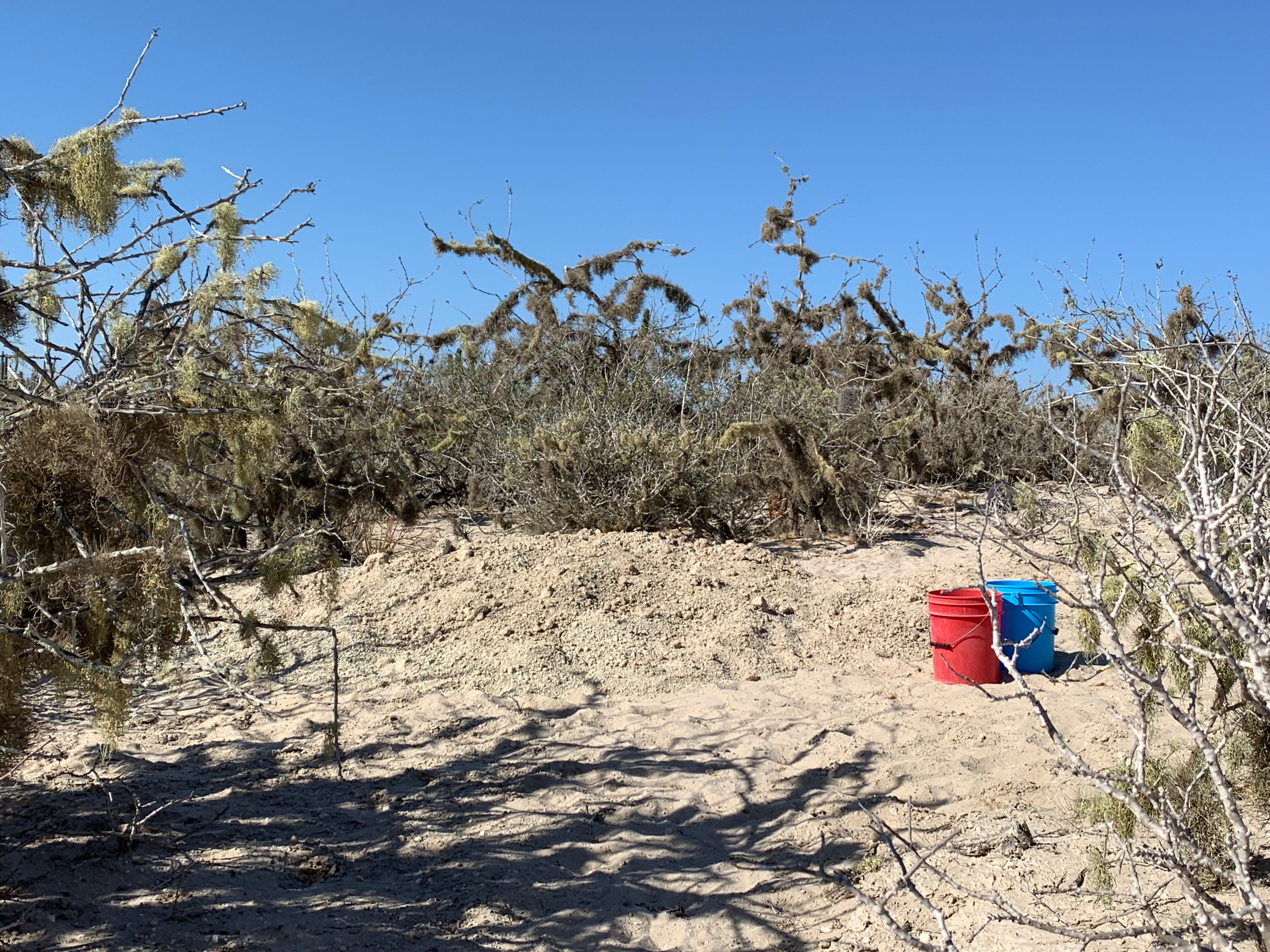
I spent many years working with horses as an equine massage therapist before I began to focus more on studying their behaviour and how the environment shaped it. I was kneading tight muscles to return them to optimal function, before realizing that a healthier environment did a better job at returning them to optimal function than I ever could. When I learned to bake sourdough, I couldn’t help but notice the similarity. What I do when I knead the dough, it doesn’t change the mass of flour, water, sourdough starter and salt, but it builds the strength of the gluten, but what is even more important is the environment. The health of the sourdough starter depends on it, although its needs are fairly simple. Now, as I have begun a new project of building my own little dwelling in the Mexican desert, I am met yet again with helping to knead, to massage something, not to change it completely, but to bring out the best in it, while being aware that the process itself and the outcome will help shape me.
I never expected to have my own plot of land or begin my own construction project with my own two hands. If someone had asked me ten years ago if I could see myself doing this, I would say they were surely crazy. Perhaps I have gone crazy, but I think a little madness helps when we have outrageous ideas.
Five years ago, after already making many changes here in the city, as the quiet chaos of Covid descended over us, yet another sign that what were doing was clearly not working, I felt a pull that I could not ignore. It was a force stronger than myself that only tugged harder as the months of uncertainty stretched on.
It was never about doing things just for myself. It was about proving this crazy seeming notion that a different way of life was possible. I was so tired of our miserable existence here - of being part of a system that is a giant pyramid scheme, one where we are constantly worried about how far ahead we’re getting, exhausting ourselves in the process, while leaving more and more struggling people behind and destroying the planet.
I believed there was a way to not only survive, but to thrive here in ways that our actions would not only benefit us (in every way, not merely financially), while simultaneously benefitting others and the planet in equal ways.
I knew a big part of this was the environment we lived in and I believed that moving off-grid and being part of a community would be the best way to achieve a healthier environment that would require of us a level of presence and connection that is practically impossible to attain in the city, amongst the noise and the distractions. So I set out, I decided not to worry about money and to pursue learning. Not in a classroom setting, but to actually explore, experiment, observe closely, reflect and most importantly to experience what I was learning about. I learned many hands on skills in the process, but I also learned something more valuable - that humans recreate the very things they talk about leaving behind when they move off-grid or to rural areas. The addiction to stress, the chaos, the control through rigid schedules and rules, not feeling good enough/productive enough, the scarcity mentality - these all show up and play themselves out in the ways humans design environments that then continue to shape them.
And here is the connection to kneading things. While we mold and shape the land we live on, that land then shapes us in return. It is a feedback loop and the vast majority of the time, we are not aware of it. We create what feels familiar, and good doesn’t feel familiar because we have never experienced it, certainly not for long stretches of time.
Like stalled horses who panic when they are turned out into a healthy, natural environment, it is something we have to ease ourselves into consciously, and I began in the city already, intentionally creating a life that healed what participating fully in our society destroyed - my physical, mental, emotional and spiritual well-being.
I realized part way into this adventure, that what I was learning in real time was the field of study known as ecopsychology - the connection between the well-being of the environment and our own well-being.
As I noticed patterns and ways in which certain environments allowed me to thrive, while others stifled me, something started to become apparent, I would need to create this space myself, because I didn’t quite see anything out there that correlated with what I knew a human needed to thrive, and what would help me meet my own needs so I could be of most benefit to the world around me, because that is how it works, when we pour into ourselves first, it is much easier to love everything around us well.
In ways I will never logically understand, as I followed the pull, the universe dropped me on this magical place in Mexico and I fell in love with the sacred, raw land that had been untouched by modern man. I came on board to help co-create the infrastructure for the off-grid community that was in the very early stages then. Even in this paradise though, I felt like what I knew to be true in my bones, was so far removed from the way things are done in the world, the conditioning that drives us, that soon there was a lot of friction between me and the man whose family was spearheading this project. He is an amazing human and he has inspired me to grow in many ways, but he also dismissed my ideas because I didn’t have the same level of experience as he did and because my ideas were so different from what anyone else was doing. Very few people are doing things a different way. When we watched YouTube channels on off-grid living, on ecovillages, even regenerative farming, compared to what all the experts were doing, what I was saying was extreme, it was inconvenient, it didn’t sound profitable. How could I argue with that? All those things were true, but I still believed it would be worth it.
I did not foresee that I would be gifted my dream plot of land to get to bring this experiment to life. It is still very much in its early stages, yet simultaneously one of the biggest hurdles has already been passed.
I didn’t pick this plot of land, I swear as I walked through the desert one day and put out the intention for coming across a space that I could build a little dwelling on, it beckoned to me. I turned off the road, walked down a cow path past a cute little Yucca tree, came around a couple of bends and walked into a little clearing that took my breath away.
‘This is the outdoor kitchen’ was the message I received. Not a voice exactly, more of a knowing. I could see a way to create a space where no matter what you were doing in the kitchen, you could always face the sunset. Dinner in off-grid spaces is generally when the sun goes down, but rarely does whoever is preparing the meal get to see the sunset. I know that beauty is not a trivial thing. How much beauty, how much magic we experience in a day, it shapes our perception of the world, which shapes our experience of it, yet off-grid spaces are often utilitarian first, and if they are beautiful, it is often still about how a place looks more than how a place is experienced. How it feels in the nervous system.
A few steps further was another clearing. ‘This is the home.’ It would not be a typical home, but a palapa, with a single wall behind the bed and sliding doors that could be closed during the worst of mosquito season or when a hurricane rolled in, but would typically be open, allowing the sun to wash over the bed at sunrise.
As I wandered around a little more, a magical porch came into view, in the space under the crowns of three little trees, a magical nook where beams of sunlight danced in the shade. A perfect spot to place a white wrought iron table and chairs for morning coffee.
Just around the next little bend, a large Yucca tree (relative of the world famous Joshua trees) that would be the perfect spot to attach an outdoor shower to.
These spaces were all separated by the plants and what I realized is that this land, it would provide both, expansive views of the valley and ocean in the distance, yet privacy. It would not be achieved through building walls or fences, but through blending into the nature that existed. Not a home under one roof, but more of a treasure hunt through the desert. What became clear was that I didn’t want to change it to suit my needs alone, I wanted to benefit it for its own sake in the process.
The crazy ideas didn’t stop there, but for some attempts at brevity, I will focus on the foundations for today - specifically for the kitchen and bedroom. The land is on a slope, and I knew this would pose challenges, but also believed it was worth it.
Most others who build here, really most people who build anywhere, bring in excavators, rip out the vegetation, and bring in whatever is needed for the foundation by machine. In the process, most of what nature has massaged and kneaded through millennia with the use of wind and water and the hoof prints of cows and horses, and then gently held in place through the roots of plants, it is all destroyed, redesigned and what usually ensues is a fight with nature, even in most spaces and designs that talk about preserving nature, there is still our conditioned belief that to create something, we need to destroy first and do it all ourselves, that as humans we know best.
My goal was to preserve the cow paths, the plants (only four small bushes have been removed for the entire construction project), and to bring sand in by hand from the sand pit down the sand road. Initially this was hand hauled with buckets, then as the path became more packed, with a wheelbarrow. Thousands of pounds of sand moved barefoot, during the hottest time of the year, little by little - and I don’t know how to explain it, but it didn’t feel hard. I enjoyed it. It felt so incredibly aligned, I would find myself smiling, sweat dripping down my back and into my eyes, the hot sand stinging the soles of my feet, and I was basking in it all. The energy I want to preserve in the space, is the energy I want to infuse it with. Patience, peace, passion - and what I realized as I worked on the foundation, was that I was building my own foundation too.
Next came hauling water from the central hub down the road, buckets strategically positioned in a wheelbarrow. Wetting the sand and then using an earth rammer to flatten it, mold it, massage it into place.
During this process, I buried four big trailer tires in the foundation of the bedroom - they will be filed with cement and used to anchor the pillars of the palapa. Eventually, they will be covered by the floor.
The lowest corner has been reinforced with a wall of tires, stacked, filled with sand, then covered with more sand, so they disappear into landscape, but support it.
I also spent time improving the drainage system that Mother Nature had so beautifully designed over many, many years. The streams where water had flowed in past rainstorms - I widened them, made them deeper, specifically above the living areas I wanted the water to go around.
I couldn’t know as I worked on all this, but this past summer and early fall would bring the wettest rainy season in over a decade to our tiny strip of the Baja peninsula even as most of the area continued to suffer from droughts. Heavy rains weekly (much needed ones), over a six week period helped pack the sand I carried into place.
Then, one night in late August, the rain pounded heavily on my tent all night and what we woke up to in the morning, was hard to believe. The rain turned roads into gouged river beds, turned the small salt marches by the beach into a giant lake stretching for several kilometres, carved a ten foot deep channel the width of a football field between the lagoon and the ocean, turned any areas where there was clay into knee deep muck for weeks on end.
When I woke up in the morning, much of the huge circular driveway at the ranchito, where the main hub is located, was standing under a foot of water, water that crept into the entry way of my tent. On our way to my little piece of land, the dogs and I trekked through mud, and encountered potholes large enough for the two big dogs to disappear into.
I was holding my breath as we meandered through the now familiar cow paths, wondering if all my hard work had been washed down hill with the torrential rain, and as I came into the kitchen, tears filled my eyes. They were tears of joy. There was no water standing anywhere and none of the foundation was affected, the same was true of the bedroom and the little porch.
It showed me that the unconventional way, listening to intuition over logic, and letting the land tell me how to build on it is not such a crazy idea after all.
It also tells me that the other unconventional ideas that have been guiding me are likely not so crazy after all. I hope to talk more about them in the next couple of articles, not only sharing some of the rest of the vision for this physical project, but also how I want to share it with others on my own terms, because for reasons I feel very strongly are necessary to truly help others connect to themselves and nature, it will not become a business.
For right now, I’m working on massaging and kneading something else - the book that talks about my story and the lessons I have learned along the way from observing nature.
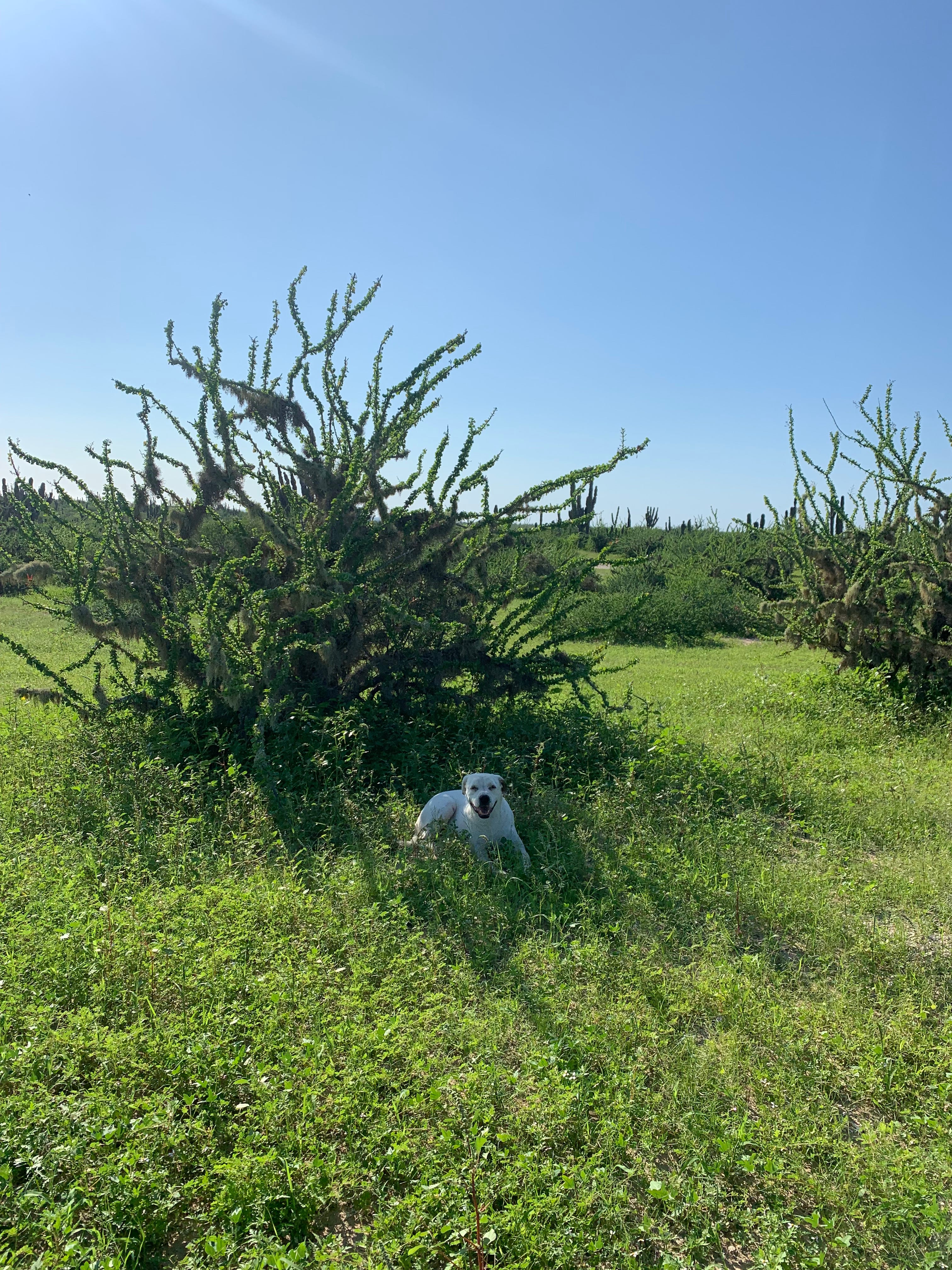
And below is a photo of the desert after weeks of rain.
This is amazing on so many levels. You are living the way of deep connection that so many of us long for. Wishing you every joy as you connect and listen to your land and your intuition.
Thank you so much, and I’m so glad you enjoyed reading.
This project has become such a big part of my mission.